Chapters to explore
Repeated patterns and loops
A loop repeats instructions. It can make a program shorter and easier to change. A count-controlled loop repeats a set number of times. Check what is inside the loop, because every instruction inside it repeats.
Try it: Make a two-action pattern and write a repeat instruction for a partner.
Events start programs
An event is something a program can respond to, such as a button press. An event can start a sequence. The same program may contain different responses to different events. Predict which instructions belong to the event that happened.
Try it: Design two paper buttons with different pretend actions and test them with a partner.
Pictures, text and an audience
A digital page can combine pictures and text. An audience is the people it is for. A heading tells them the subject, while a caption explains a picture. Choose readable text and useful images. Ask before using another person’s photograph.
Try it: Make a notice for a real audience, using your own drawing and a clear caption.
Sorting and organising information
Data is information recorded for a purpose. Categories help sort it. A category needs a clear rule, such as colour or number of legs. Use one agreed rule at a time and check that each item has been recorded correctly.
Try it: Sort six household objects using one rule, then try a different rule.
Kind and private online choices
Online actions affect real people. Ask before sharing someone’s picture or work. Keep passwords private, with help from a parent or carer when needed. If something feels wrong, stop and seek help. A mistake can be discussed and put right.
Try it: Discuss three pretend sharing decisions with an adult. Use no real account details.
Test, explain and improve
A useful test compares an expected result with what actually happens. If they differ, trace the instructions in order. Explain the mistake before changing it. A program that works once may still need testing with a different start or event.
Try it: Make a route, record a prediction, test it, and describe one improvement.
Precise routes on a grid
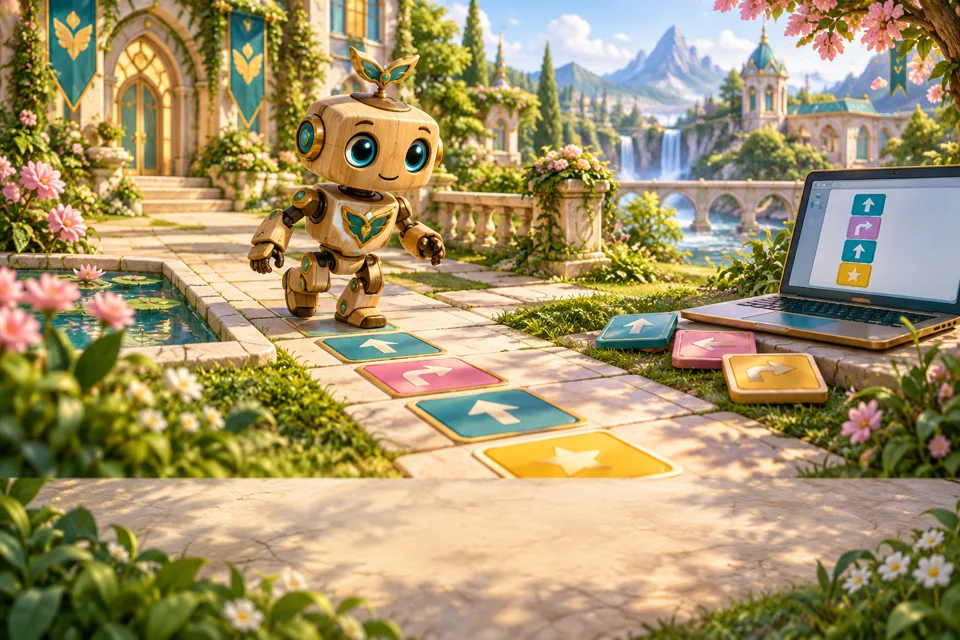
A grid route needs a starting square and facing direction. Forward means the direction the character faces. Turning changes direction; moving changes position. Trace one instruction at a time to predict the final square.
Try it: Plan and test a toy route on a drawn grid.
Files and useful names
A file stores digital work. Folders organise files. Choose names that describe content without including private information. Saving a new version can keep earlier work available. Check the location so you can find it again.
Try it: Organise pretend paper files into labelled folders.
Check a digital instruction
An on-screen instruction may ask you to choose, type or share. Read it with an adult if unsure. Do not enter private details simply to continue. Helpful digital design makes choices clear and provides a way to stop or ask for help.
Try it: Compare clear and unclear fictional instructions.