Chapters to explore
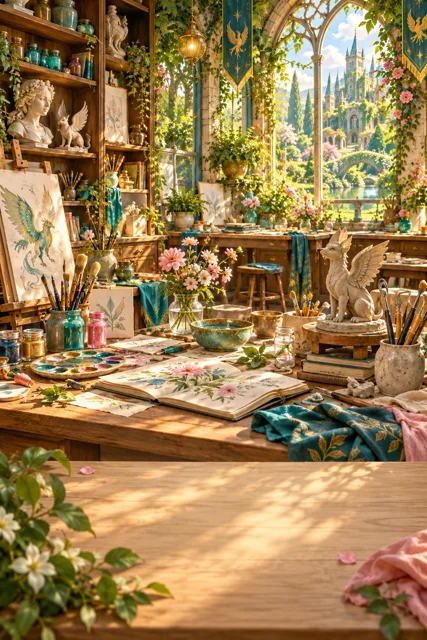
Draw from observation
Observation drawing begins with looking carefully at an object. Compare its large shapes before adding details. A sketch is a way to explore, so light marks and revisions are useful. Drawing from memory and drawing from observation can produce different results.
Try it: Draw a safe natural object and compare its proportions.
Paint shades and explore mood
A tint is made by adding white to a colour; a shade can be made by adding black. Small changes can alter the effect greatly. Colours may suggest a mood, but people and cultures do not always connect the same colour with the same feeling.
Try it: Make a row of lighter and darker versions of one colour.
Sculpture and three-dimensional form
Sculpture has three-dimensional form: height, width and depth. You can view it from different sides. Materials may be shaped, joined or assembled. A stable base helps a model stand, but stability depends on the whole arrangement.
Try it: Make a small model from safe reusable material and test its balance.
Tempo and dynamics
Tempo is the speed of music. Dynamics describe loudness and changes in loudness. A piece can be fast and quiet or slow and loud. Changes should be deliberate and comfortable for everyone listening.
Try it: Perform one rhythm at two comfortable speeds and two gentle loudness levels.
Musical patterns and rests
A musical phrase is a short musical idea. Patterns can repeat, change or pause. A rest is a planned silence. Simple symbols can help you remember when to clap, tap or wait, provided everyone knows what they mean.
Try it: Invent and perform a short pattern with a rest.
Move to communicate an idea
Dance can use direction, level, speed and shape to communicate an idea. Movements can be adapted for seated or standing participation. Leave enough space and choose comfortable movements. A sequence has a beginning, development and ending.
Try it: Create a short seated or standing movement sequence about weather.
Strong structures and moving parts
A structure supports a load. Folding or shaping a material can change its strength. A mechanism makes or transfers movement; a wheel turning on an axle is one example. Test a small model safely rather than assuming its appearance proves its strength.
Try it: Build and compare two small paper structures with adult help.
Tell a story with pictures
A picture sequence shows events in order. A clear beginning introduces the situation; the middle develops it; the ending shows what changed. Details can give clues without explaining everything in words. Check that a viewer can follow the sequence.
Try it: Draw a three-frame story and ask a partner to retell it.
Reflect on creative choices
Reflection means considering what you made, how it works and what to try next. Name a choice and its effect. Feedback can help without removing the maker’s own ideas. Keep a first version when possible so you can see how the work developed.
Try it: Keep two versions of a small artwork and explain one change.