Chapters to explore
Clear instructions and sequences
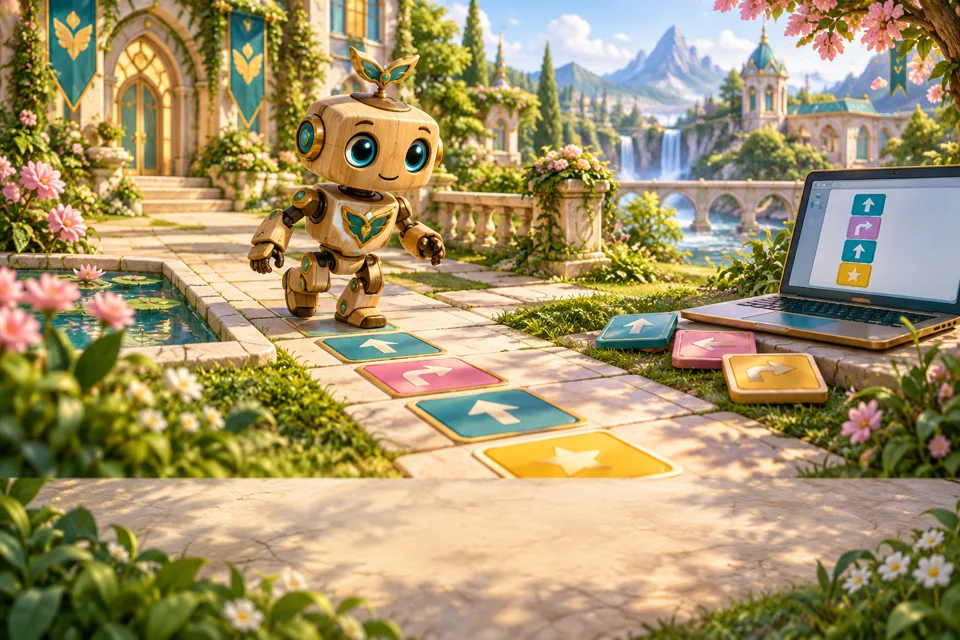
An algorithm is a set of instructions for a task. Instructions need a clear order and enough detail. A computer follows the instructions it receives; it does not guess what we meant. First describe the goal, then choose one small step at a time.
Try it: Give an adult three precise instructions to move a toy on a paper grid.
Devices, inputs and outputs
Digital devices carry out instructions. An input sends information into a device, such as pressing a button or taking a photograph. An output is something the device produces, such as a picture or sound. Some parts, including touchscreens, can do both.
Try it: Find two digital devices with an adult. Name one input and output for each.
Make, save and find a picture
A digital picture can be made with drawing tools. Choose colours and shapes deliberately. Saving keeps a copy so it can be opened later. A useful name describes the work. Saving on one device does not automatically mean the picture has been shared with other people.
Try it: Create a simple digital picture with an adult, save it and find it again.
Private information and trusted help
Some information, such as a home address or password, should not be posted for strangers. A friendly picture or name does not prove who someone is. If a message is confusing or worrying, pause and show a trusted adult. You do not have to answer.
Try it: With an adult, sort imaginary examples into safe-to-display and ask-first groups. Do not use real private details.
Finding and fixing a mistake
A bug is a mistake in a program. Debugging means finding and correcting it. Predict what should happen, follow each instruction, and compare the result with the goal. Change one thing at a time so you can see whether the change helped.
Try it: Write a three-step toy route with one deliberate mistake. Ask someone to find and repair it.
Technology helps people
People use technology to create, communicate and solve problems. Different tools suit different jobs. A camera records pictures, while a keyboard helps enter text. Technology is one possible tool; talking, drawing and working with real objects can also be useful.
Try it: Choose a small task and compare a digital and a non-digital way to do it.
Choose and control a tool
Drawing tools have different jobs. A pencil tool makes marks, an eraser removes them and undo reverses a recent action. Try one tool at a time and observe the result. Save a copy before making large changes.
Try it: Explore two adult-approved drawing tools.
Patterns and predictions
A pattern repeats according to a rule. Predicting the next part means identifying that rule. Some short sequences can fit more than one possible rule, so explain your choice. Computers need the rule stated rather than guessed.
Try it: Make a repeating pattern and explain it to a partner.
Take care of shared devices
Shared devices need careful handling and agreed routines. Ask before changing someone else’s work. Keep food and drink away as instructed, and report damage to an adult. A device is a shared tool, not a reason to exclude someone.
Try it: Discuss a fair shared-device routine.