Chapters to explore
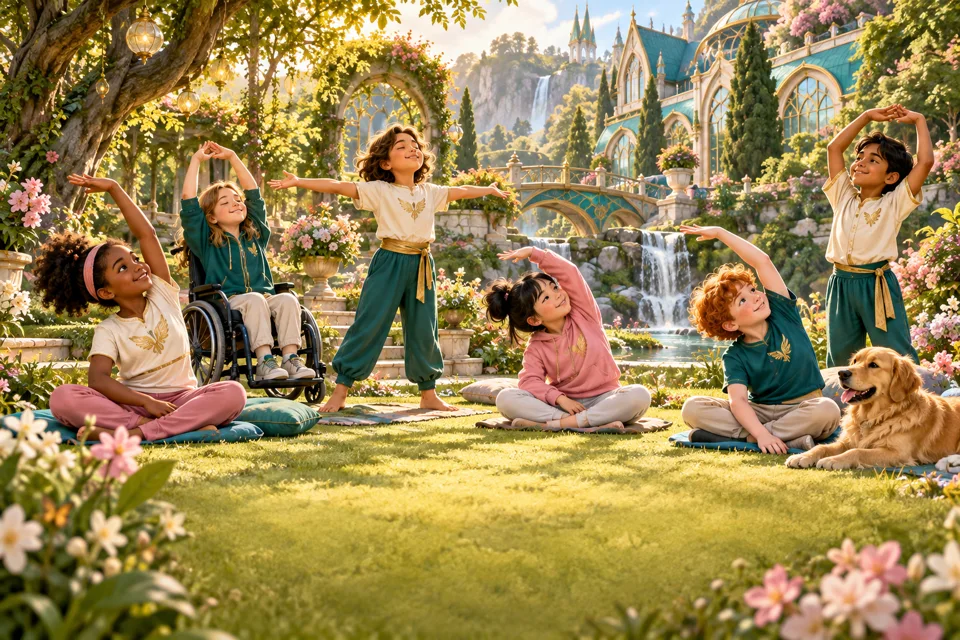
Move safely in your space
Practical movement needs suitable space, equipment and adult guidance. Choose actions that fit your body and current needs. Seated and standing options can both be useful. Stop if something hurts or feels wrong and tell the responsible adult.
Try it: With an adult, choose a comfortable gentle movement task.
Balance and body control
Balance and control involve deliberate positioning and movement. Tasks can be adapted using support or seated positions. Work slowly in a safe area and avoid risky heights or unstable equipment. Notice your own control rather than comparing bodies.
Try it: Try a supported control activity agreed with an adult.
Coordination: send and receive
Coordination combines attention and movement. Sending and receiving a soft object can be adapted by rolling, passing or using a larger target. Agree a ready signal and a suitable distance. Avoid aiming at anyone’s face.
Try it: Practise a gentle roll or pass with adult guidance.
Rhythm and movement sequences
A movement sequence links actions in an order. Rhythm can help timing, but movements should remain comfortable. Use levels, directions or gestures suited to the participant. Plan a clear beginning and ending and leave safe space.
Try it: Create a short suitable movement sequence with an adult.
Games, rules and cooperation
Rules define a game’s objective and safe ways to take part. Agree adaptations before playing. Cooperation uses communication and shared decisions. A game result reflects that activity, not anyone’s worth. Stop and seek help if play becomes unsafe.
Try it: Design a safe cooperative target game.
Practice and personal improvement
Improvement can concern control, confidence, consistency or understanding. Choose a manageable goal and repeat safely with breaks. Feedback should be specific and kind. Compare your own performance over time only when the comparison is meaningful and suitable.
Try it: Agree a small skill goal and record a supportive observation.
Tactics and finding space
A tactic is a planned action to meet a game objective. Finding space can create passing or movement options. Adapt rules and roles to participants. Discuss what happened using evidence and avoid blaming one person for the whole outcome.
Try it: Discuss tactics in an adult-led adapted game.
Outdoor decisions and water safety
Outdoor activities require suitable supervision and local safety guidance. Conditions can change. Water skills and swimming must be taught by appropriately qualified people in suitable settings; a screen lesson is not swimming instruction. Never enter water to attempt an untrained rescue.
Try it: With an adult, review the safety arrangements for a suitable local activity.
Plan and review an active project
An active project combines safe planning, suitable goals, participation and reflection. Consider space, equipment, access and adult supervision. Evaluate cooperation and skill development as well as outcomes. Adjust the plan when conditions or participants’ needs change.
Try it: Plan a small adult-supervised active session and reflect on participation.